Equity Map Initiative
ROLE:
UX/UI Designer/Researcher/Writer
ACTIVITIES:
Full suite; from user research and synthesis through design ideation, prototyping, and testing
EXPERIENCE:
Mobile app
YEAR:
2025
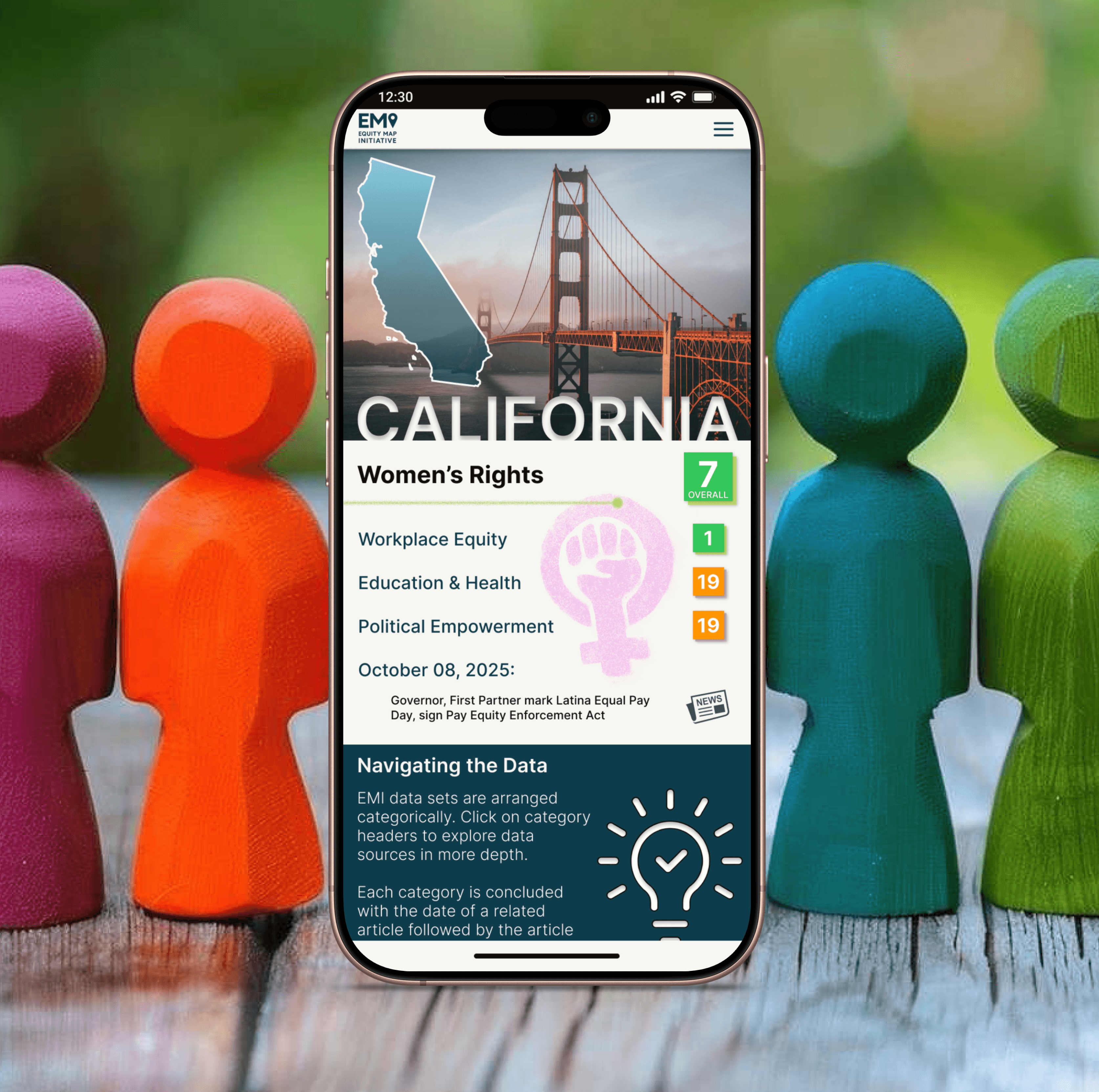
Awaiting Social Equity: Tools for Safety
problem.
Political tensions, surging violence, and attacks on personal liberties have changed the societal landscape within the United States in a relatively short period of time.
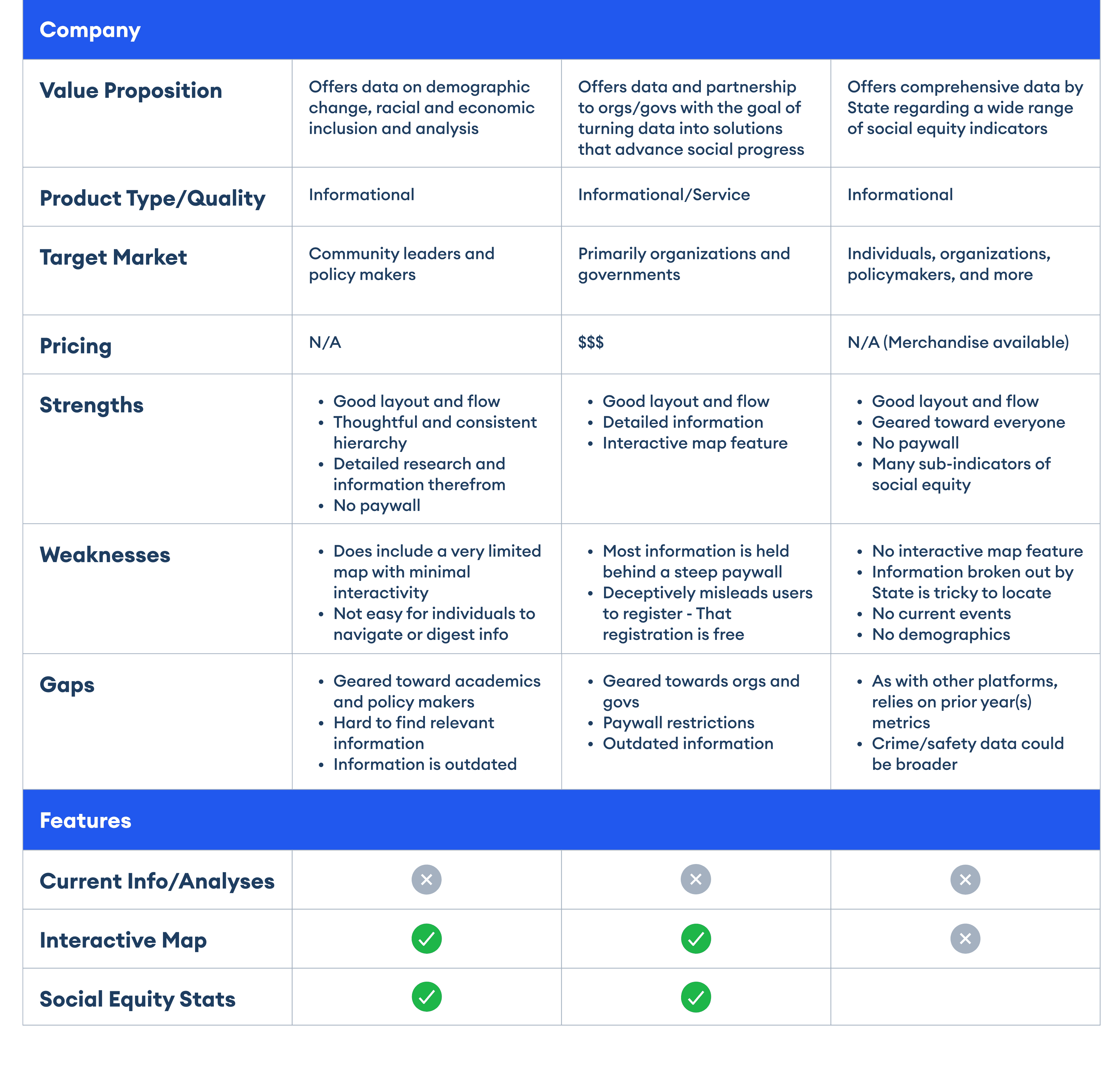
While there are a slew of social justice websites and some companion apps that dive deeply into the metrics behind these inequities, much of the informational resources in existence cater to community leaders and public policy makers. They do a great job of compiling data, but a poor job of purposing that information for individual consumption.
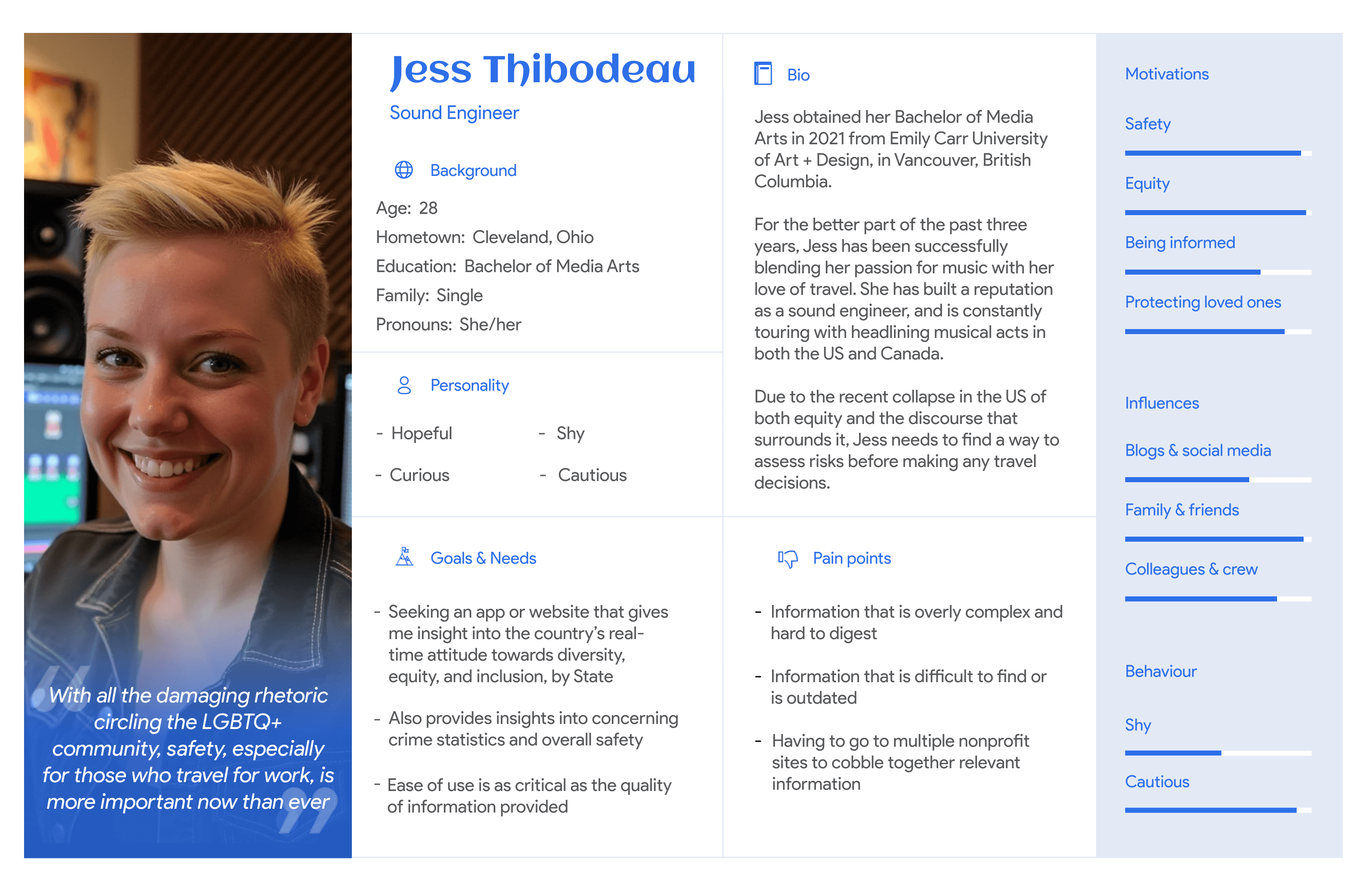
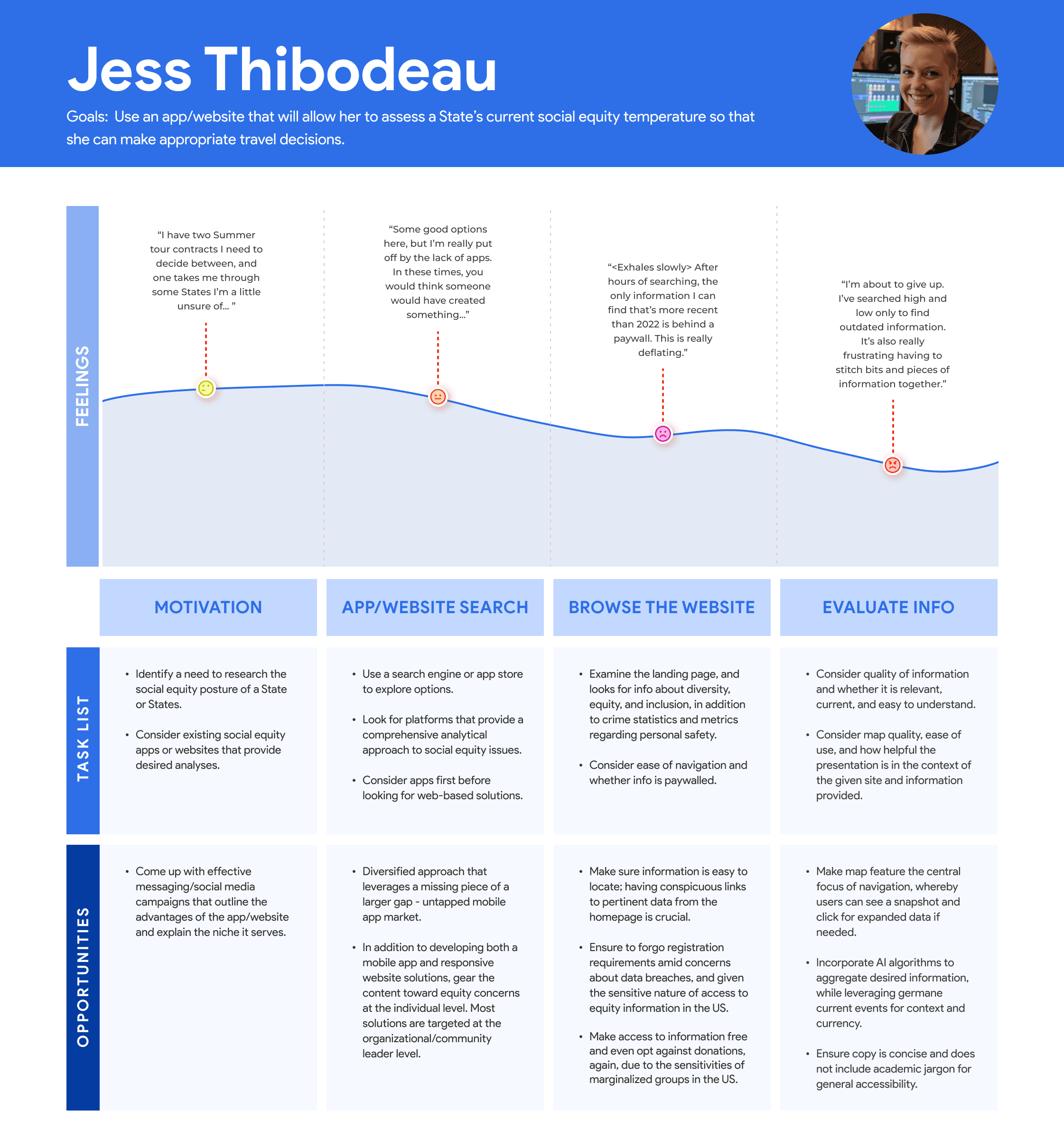
Through this project, Shaughnessy Design sought a way to distill complex data pertaining to social equity topics for individuals. Specifically, we looked for a way to deliver highly relevant and palatable data that would enable folks on the receiving end of socially unjust policies and practices to make informed decisions about whether and where to travel.
challenge.
The primary challenge with the Equity Map Initiative (EMI) project became which data sets deserved priority. The social equity space is absolutely awash in complex, and most often academic, data that touches inequities of varying scale and scope. We needed to pair down the data to convey only the most relevant indicators of concern to prospective EMI users.
Currency became the next focal point. When it comes to social equity data analysis, the usual standard bearers are academic institutions or independent thinktanks. For a variety of reasons, these analytic reports are released intermittently, with the most frequent refreshes occurring biennially. We needed to discover a way to bring more currency to what can in some cases be construed as stale data.
Lastly, since nearly all of the social equity analysis we needed to leverage for this project is academic and geared towards policy makers, we had to distill it appropriately. In addition to presenting data sets EMI users would be interested in, we also needed to provide the necessary context, present a high level of prospective use cases, and essentially underscore the importance of this data and how it helps the user either achieve safer circumstances or avoid deleterious ones altogether.

solution.
Shaughnessy Design succeeded in bringing the EMI vision to life by prioritizing social equity data that has a nexus to safety. On a more granular level, this involved prioritizing inequities that have been at the forefront of recent politically incentive rhetoric and policy decisions. We wanted to ensure protected classes that are the subject of disparate treatment were given the highest priority in our determination, with supporting indicators leveraged where they made the most sense in furtherance of a wholistic picture of a given state’s overall stance on equity.
In addressing the currency challenge, the first approach was to utilize AI to aggregate the most recent data sets of concern. We also incorporated brief hyperlinked synopses of relevant and current news articles under each Key Equity Indicator (KEI). The idea here is to offer users more recent context to the data that is being presented.
We achieved distillation of largely academic treatments of equity by presenting a comparatively condensed call-to-action on the landing page. Here, we offered context for users—why they should care about referencing state-level treatment of equity. Similarly, we reflected on the importance of the EMI objective and used the same writing techniques to present the user with an overview of use cases for this application.
Finally, the central feature of the EMI app experience naturally evolved into a simple-to-navigate map feature. This feature allows users to quickly find a state of her/his/their choosing, and simply by clicking on the geographic boundaries the user is brought to an overview of the respective state’s equity posture. Here, the user can navigate through KEIs, click on aggregated data links, explore relevant news topics, and more importantly, achieve an informed perspective for the purposes of travel, relocation, or otherwise in relatively short order. This ultimately serves the end of keeping at-risk people safer from harm than they otherwise would be without such access to information.